- Iraq,Erbil / Istanbul,Türkiye
- info@socigate.com

Office Address
Iraq,Erbil
Istanbul,Türkiye
Phone Number
+9647738898880 +9647500998880 +905373192859
Email Address
info@socigate.com
Iraq,Erbil
Istanbul,Türkiye
+9647738898880 +9647500998880 +905373192859
info@socigate.com
 by Socigate
 As technology evolves and consumer expectations rise, the marketing industry continues to experience rapid and ongoing change. Marketing is no longer based solely on traditional advertising. It now requires a deep understanding of digital behavior, intelligent use of data, and the ability to create more relevant experiences for every custIn 2026, the question is no longer: Will companies use artificial intelligence?Instead, it has become: How can they use it better, faster, and in a more human way?According to HubSpot’s 2026 State of Marketing report, 80% of marketers use AI for content creation, while 75% use it for media production. This means technology has become a baseline rather than a standalone competitive advantage.
At the same time, trust, clarity, differentiation, and authentic human content are becoming increasingly valuable. The easier content becomes to produce, the harder it becomes for brands to leave a distinctive impression. This is why the companies most likely to succeed will be those that combine technological efficiency with strong ideas, and automation with a genuine understanding of people.
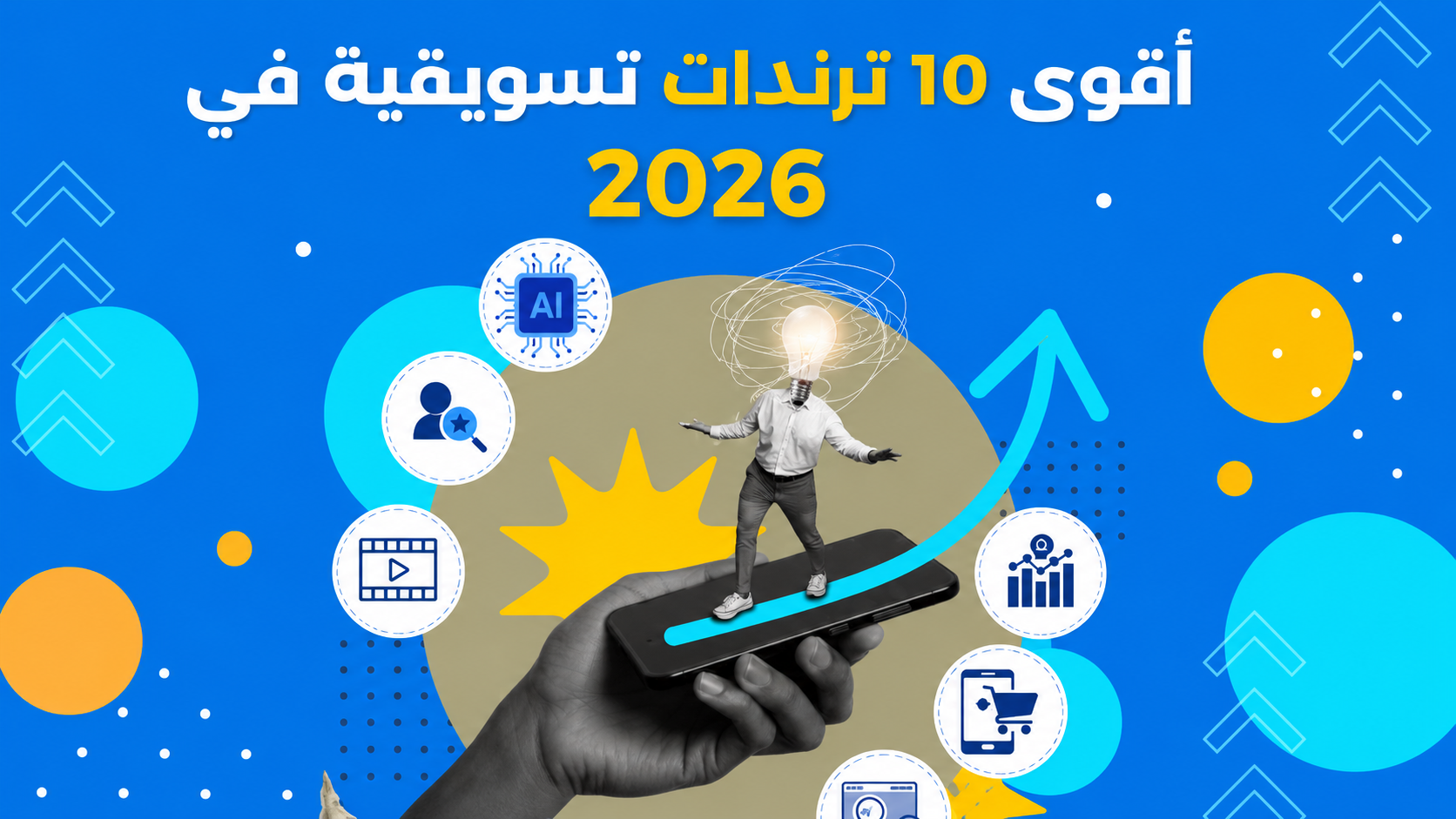
In this article, we explore the top 10 marketing trends for 2026, analyzing the impact of each trend and providing practical examples and actionable steps to help companies and marketers turn these trends from predictions into measurable competitive advantages.
Artificial intelligence has become a cornerstone of modern marketing. As more data becomes available about customer behavior, companies can now deliver highly personalized marketing experiences at a level that was not possible just a few years ago.
Instead of sending the same message to everyone, brands can customize content, offers, timing, channels, and even product recommendations based on the needs of each individual user.
Hyper-personalization goes far beyond adding a customer’s name to an email. It relies on analyzing purchase history, search activity, pages visited, engagement times, preferred content types, and other behavioral signals to predict the customer’s most likely next action.
Salesforce reports also indicate that both generative and predictive AI have become essential tools that marketers use for forecasting, content creation, and integration at scale.
However, the real challenge in 2026 lies in execution quality. Personalized messages that feel intrusive or inaccurate can damage trust. Personalization should therefore be useful, transparent, and genuinely valuable to the customer, whether by saving time, simplifying choices, or presenting a relevant offer instead of overwhelming them with repetitive messages.
One of the most important digital marketing trends in 2026 is the rise of AI agents. These systems do more than simply answer questions. They can carry out a sequence of actions such as searching, comparing options, filtering results, recommending the most suitable product, and potentially completing a significant portion of the purchasing journey.
According to Kantar’s 2026 marketing trends report, 24% of AI users already use AI-powered shopping assistants, while a significant proportion of intelligent assistant users regularly seek AI-supported recommendations.
This changes the nature of competition. Brands are no longer communicating only with people; their information must also be clear and understandable to the systems that help consumers make decisions.
This is where conversational commerce becomes increasingly important through chatbots, messaging apps, voice assistants, and AI-powered tools.
Customers want to ask natural questions such as:
“What is the best option for my budget?”
“What is the difference between these two products?”
“Can it arrive before Thursday?”
The brands that succeed will be those that provide accurate and fast answers while allowing customers to move seamlessly from asking a question to making a purchase.
For years, Search Engine Optimization, or SEO, focused primarily on ranking in traditional search engine results pages.
In 2026, however, an increasing share of the search journey is taking place inside AI tools and answer engines that provide direct summaries, compare alternatives, and recommend sources without requiring users to visit dozens of webpages.
This has led to the rise of two important concepts: AEO, or Answer Engine Optimization, and GEO, or Generative Engine Optimization.
Kantar highlights the need for brands to create clear, structured, and machine-readable content so that AI models can understand what a company offers and why it deserves to be recommended.
This does not replace SEO. Instead, it expands it.
Strong content in 2026 should answer questions directly, use precise headings, provide credible and well-supported information, demonstrate expertise, and include definitions, tables, comparisons, and frequently asked questions.
Company and product information should also remain consistent across websites and digital platforms.
As tracking restrictions increase and consumers become more aware of privacy, first-party datahas become one of the most valuable marketing assets.
First-party data refers to information that a company collects directly from customers through its website, subscriptions, loyalty programs, surveys, purchases, and customer service interactions, with clear consent.
The value of this data does not come from volume alone. It comes from quality and usability.
Many companies already possess large amounts of customer information distributed across their stores, websites, email platforms, and customer service systems, yet they are still unable to build a unified view of the customer.
Salesforce indicates that more than half of marketers have access to real-time data, but activating that data effectively still requires technical support in many organizations.
In 2026, privacy-first marketing will also become a source of trust.
Customers are more willing to share their information when they clearly understand the value they will receive in return, such as more accurate recommendations, relevant offers, faster experiences, or content tailored to their preferences.
By contrast, collecting data without explanation or using it excessively can encourage customers to opt out.
Short-form video remains one of the most powerful tools for discovery and audience reach in 2026, but its role is no longer limited to entertainment or generating views.
It has become a direct part of the purchasing journey.
Users can watch a product, understand its benefits, see it used in a real-life context, and then move directly to ordering or purchasing it either within the platform itself or with a single additional step.
HubSpot’s 2026 Social Media Trends report highlights the continued growth of video and the increasing importance of social media in brand building.
This means companies need to create fast and clear content that is tied to a specific business objective, whether that is reaching a relevant audience, explaining a product, overcoming an objection, encouraging a trial, or driving a purchase.
The best-performing content is not always the most expensive to produce.
Content that begins with a genuine customer problem, demonstrates the product in use, and provides visual proof or a clear result can often be more persuasive than a highly polished advertisement that feels disconnected from everyday customer experience.
Brands are increasingly working with smaller and more specialized creators because the relationship between these creators and their audiences is often stronger and more trusted.
A large influencer may provide massive reach, while a niche creator may have far greater influence within a specific community.
At the same time, brands are relying more heavily on User-Generated Content, or UGC, including reviews, product experiences, before-and-after content, unboxing videos, and honest answers to customer questions.
This type of content helps close the trust gap by showing a product in a real-world context rather than relying entirely on brand promises.
However, success does not come from sending products to anyone with a large number of followers.
Creator selection should be based on audience relevance, shared values, and presentation style.
Brands should also measure meaningful performance indicators such as traffic quality, discount code usage, customer acquisition cost, and the percentage of content that can be repurposed for future campaigns.
When almost anyone can produce dozens of posts using artificial intelligence, standing out becomes more difficult.
In 2026, brands with a clear point of view and a recognizable voice will outperform those that simply produce the largest volume of content.
According to HubSpot’s 2026 State of Marketing report, artificial intelligence has become a baseline, while trust, authenticity, and differentiation are the factors that drive meaningful growth.
HubSpot’s social media report also indicates that 77% of social media marketers believe authenticity is more important than production value when creating content.
Being human does not mean being unstructured or producing low-quality work.
It means having experience, expertise, opinions, stories, and a recognizable style.
Artificial intelligence can accelerate research, drafting, and analysis, but editorial decisions, core messages, stories, and examples should still be rooted in the real experience of the brand and its audience.
As social platforms become more saturated and organic reach becomes less predictable, brands are increasingly building smaller and more engaged communities.
These may include customer groups, messaging channels, specialized newsletters, private events, and brand ambassador programs.
The objective is not simply to gather the largest possible number of people. It is to create a space that provides continuous value and strengthens customer loyalty.
Kantar highlights the rise of smaller communities as one of the key trends for 2026, while HubSpot also notes growing interest in platforms that put community at the center of the user experience.
A community provides brands with direct access to customer questions, needs, and language.
It also turns marketing into a conversation rather than a one-way broadcast.
The challenge is that a community will not succeed if it becomes nothing more than another channel for promotional offers.
Members need to receive value that is difficult to find elsewhere, such as expertise, early access, support, networking opportunities, education, or meaningful involvement in product development.
Today’s customer moves between search engines, social media, websites, physical stores, email, messaging apps, and customer service channels.
It is therefore no longer acceptable for the customer journey to restart from the beginning every time they move to a different channel or for customers to receive inconsistent prices, messages, and experiences.
Omnichannel marketing in 2026 means connecting these touchpoints around the customer.
If someone discovers a product on Instagram, visits the website, and then asks a question through WhatsApp, the information should remain consistent and the team should be able to understand the context of that journey.
Real-time data also allows brands to adapt messages and offers based on what is happening now rather than relying only on delayed reports.
However, integration does not mean following the customer everywhere with the same product advertisement.
A strong omnichannel experience adapts to each stage of the journey: awareness content, comparison information, trust-building proof, relevant offers or reminders, followed by post-purchase service and retention strategies.
Advanced marketing teams are moving away from the traditional campaign model in which a campaign begins, ends, and its results are eventually forgotten.
Instead, they are adopting a continuous model: execute, measure, learn, optimize, and repeat the cycle quickly.
HubSpot refers to this approach as Loop Marketing, where every interaction and result becomes an input for the next stage.
Predictive analytics supports this model by identifying patterns and estimating probabilities such as:
Who is most likely to buy?
Which customers are at risk of cancelling?
Which offer is most suitable for each customer segment?
What type of content is most likely to generate high-quality leads?
AI tools can also help summarize large datasets and identify patterns that teams may not easily detect manually.
However, numbers do not interpret themselves.
Companies should begin with a clear hypothesis and a business-related metric, test one variable whenever possible, and document what they learn.
Success in 2026 will not belong to the companies that run the largest number of campaigns. It will belong to those that learn faster and turn that learning into a repeatable system.
Companies do not need to adopt all ten trends at the same time.
A trend becomes valuable when it solves a genuine business problem or creates a clear opportunity, not simply because it is popular.
Start by identifying the biggest gap in the customer journey or marketing process, then choose the trend that can address it with the least unnecessary complexity.
The following questions can help determine your priorities:
Once you have answered these questions, choose a pilot project with a defined duration, set one or two success metrics, and review the results before expanding.
This is how 2026 marketing trendscan be transformed into practical business decisions instead of becoming a long list of tools and buzzwords.
Marketing trends in 2026 reveal that the industry is moving in two directions at the same time: toward more intelligent and powerful automation, and toward a greater need for trust, authenticity, and human connection.
The advantage will not go to companies that use the largest number of tools. It will go to those that build systems connecting data with ideas, personalization with privacy, and speed with quality.
Artificial intelligence and AI agents will reshape search, purchasing, and content production.
Short-form video, content creators, and digital communities will continue to influence discovery and trust.
Behind the scenes, data quality, system integration, and continuous analysis will determine whether companies can turn these trends into real growth.
The most important step is to begin with customer needs and business objectives.
Choose one trend, apply it on a small scale, measure its impact, and learn quickly.
Successful marketing in 2026 is not about chasing every new development. It is about identifying the developments that genuinely make a difference.
Artificial intelligence is the most influential trend, but it is no longer a competitive advantage on its own. Its real value comes from using it for personalization, analysis, and automation while maintaining content quality, trust, and a strong human brand identity.
No. SEO will continue to be important, but it will expand to include optimization for answer engines and artificial intelligence platforms through structured, trustworthy, direct, and machine-readable content.
SEO focuses on improving visibility in traditional search engine results, while GEO focuses on increasing the likelihood that a brand and its content will be understood, cited, or recommended within generative AI responses.
No. It is better to choose one or two trends that address a specific business problem, such as improving customer data, producing short-form shoppable video, or creating content that answers audience questions effectively.
By defining clear brand voice and tone guidelines, using AI for research, drafting, and analysis, and then adding human expertise, examples, opinions, and editorial review before publishing.
The most useful metrics depend on the objective, but they may include conversion rate, lead quality, customer acquisition cost, average order value, customer retention, repeat purchase rate, and customer lifetime value.
