- Iraq,Erbil / Istanbul,Türkiye
- info@socigate.com

Office Address
Iraq,Erbil
Istanbul,Türkiye
Phone Number
+9647738898880 +9647500998880 +905373192859
Email Address
info@socigate.com
Iraq,Erbil
Istanbul,Türkiye
+9647738898880 +9647500998880 +905373192859
info@socigate.com
 by Socigate
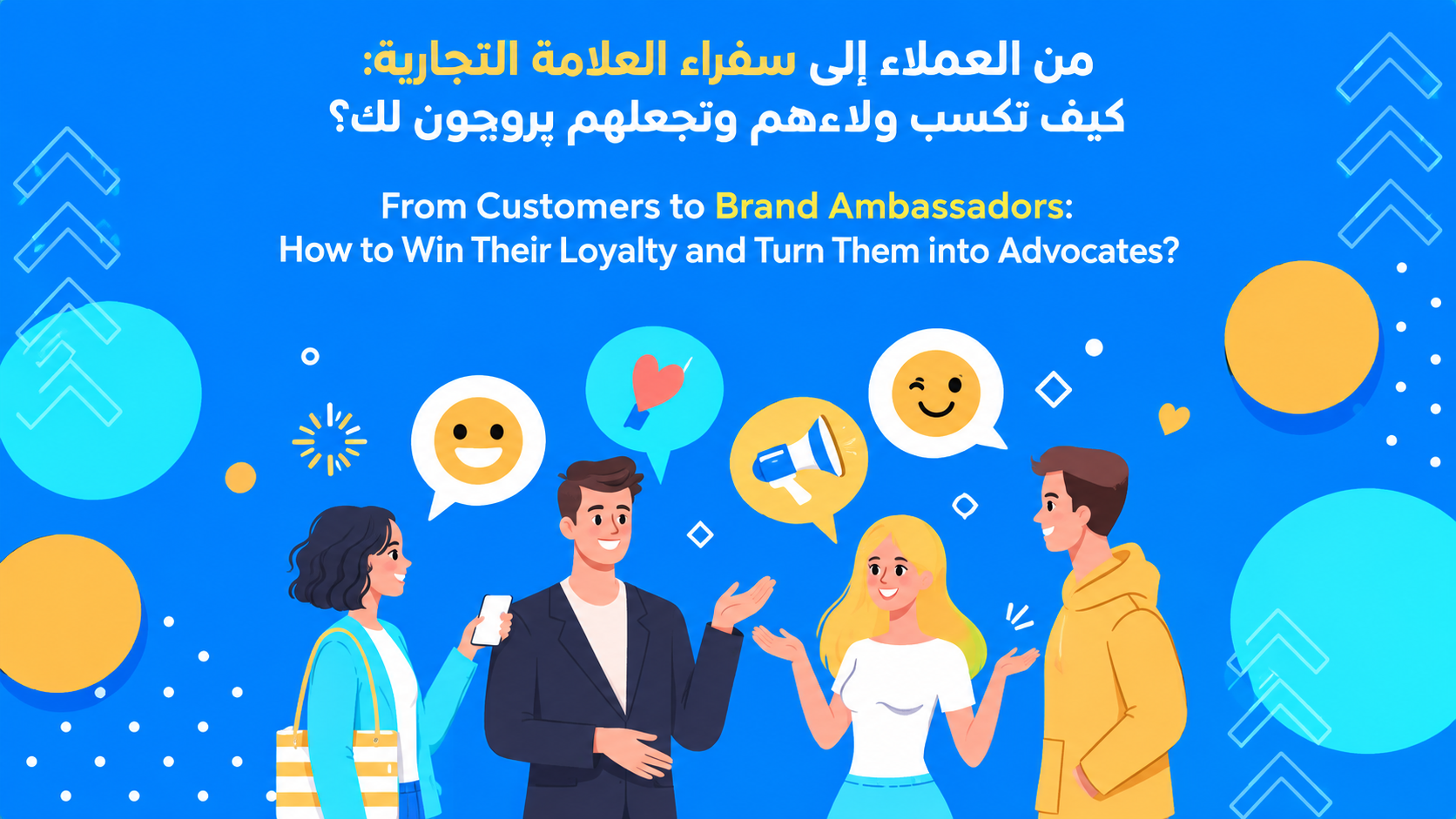
 Acquiring a new customer is a great achievement, but retaining that customer and turning them into someone who talks about your brand and recommends it to others is where real growth begins.
In crowded markets, competition is no longer based solely on price or product quality. Customers can compare dozens of alternatives within minutes. What truly makes the difference is the experience they have with the brand and the extent to which they feel that the company understands them and provides enough value to make them want to come back.
This is where customer loyalty becomes essential. A loyal customer does not buy from you just once. They return, engage with your content, trust your recommendations, and may eventually become one of your brand ambassadors, promoting your business because they genuinely want to, not because you paid them to do so.
But the question is: How do you turn a simple transaction into a long-term relationship that makes the customer one of your brand’s strongest marketing assets?
That is what we will explore step by step.
Customer loyalty refers to a customer’s willingness to continue doing business with a particular brand and repeatedly choose its products or services, even when competing alternatives are available.
However, true loyalty is not based solely on repeat purchases.
A customer may return because of price or because there is no suitable alternative, without having any real emotional connection to your brand.
Stronger loyalty appears when your brand becomes an option the customer trusts, prefers, and actively wants to recommend to others.
For this reason, customer loyalty is directly connected to several important factors, including:
The more these elements work together, the more likely a customer is to move from being a one-time buyer to a loyal customer, and eventually to someone who advocates for your brand and recommends it to others.
When we talk about brand ambassadors, influencers or celebrities hired by companies to promote products may come to mind.
However, in the context of customer loyalty, we are referring to a different and more organic type of ambassador.
A true brand ambassador may simply be a customer who purchased from you, had a positive experience, and then started talking about it naturally.
That customer may:
This is where the power of word-of-mouth marketing begins, because the marketing message is no longer coming directly from the company. It is coming from someone who has actually experienced the brand.
Advertising may attract attention, but building a base of loyal customers creates a marketing asset that can continue delivering value over the long term.
Consumers know that advertisements are designed to persuade them to buy.
But when they hear a recommendation from someone they know, or read a genuine experience from an actual customer, the message feels more natural and credible.
This is why customer recommendations play such an important role in building trust.
Word-of-mouth marketing is one of the most valuable outcomes a brand can achieve.
Instead of being the only party talking about the quality of your products, customers begin sharing their own experiences and recommending your brand to others.
Brands that build strong relationships with their audiences are more capable of retaining customers.
This means they do not have to rely constantly on acquiring new customers. They can also increase the value of the customers they already have.
When customers feel that they are part of a community, the relationship is no longer based purely on buying and selling.
It begins to evolve into participation, engagement, and a sense of belonging.
This level of relationship marketing is difficult for competitors to copy because it is built through long-term relationships.
The process of turning customers into brand ambassadors does not begin by asking them to share a post or write a review.
It begins much earlier.
It starts from the first moment a customer discovers your brand and continues throughout every stage of the customer journey.
Here are the most important strategies.
The first step in learning how to build customer loyalty is understanding your audience.
You cannot build a strong relationship with customers if you do not understand their needs, problems, and motivations.
Ask yourself:
Who is the ideal customer?
What problem are they trying to solve?
What makes them choose one product over another?
What frustrates them most during the buying process?
What do they expect from your brand after completing a purchase?
What would encourage them to return?
Businesses can rely on data, surveys, customer feedback, purchase history, and user behavior analysis to understand these details more effectively.
The more your decisions are based on real customer insights rather than assumptions, the more capable you become of creating an experience that truly fits their needs.
You may have an excellent product and still lose the customer because of a poor experience.
That is why customer experience is one of the most important drivers of loyalty.
The experience begins from the first moment a customer sees your advertisement, website, or social media account, and it does not end when the purchase is completed.
Think about every stage of the customer journey.
Is the information clear?
Can the customer easily understand what you offer?
Does your website or social media account provide enough answers?
Is the process simple?
Are there unnecessary steps?
Are payment and communication options clear?
Can the customer access support when needed?
Are problems resolved quickly?
Do you stay in touch after the sale, or does the relationship end as soon as the payment is made?
If you are looking for ways to improve customer experience, start by reducing friction across these three stages.
Customer satisfaction means delivering what the customer expected.
Loyalty can begin when you give them more than they expected.
This does not necessarily mean offering large discounts or expensive gifts.
It can be something simple, such as:
These details can transform customer satisfaction into a memorable experience customers want to share.
A complaint does not always mean losing the customer.
The way you handle the complaint determines the outcome.
When a customer faces a problem and finds a team that listens seriously and provides a clear, fast solution, the negative experience can actually become another reason to trust the brand.
A strong strategy for building trust with customers should therefore include:
Smart companies do not hide customer feedback. They use it to improve products, services, and internal processes.
Customers do not want to feel like just another number in a database.
That is why personalization plays an important role in customer loyalty.
Use customer data to create experiences that are more relevant to individual needs, such as:
This is where customer relationship management tools become valuable, as they help businesses organize customer data and understand the history of every interaction.
But remember:
Successful personalization should make customers feel understood, not monitored.
Many companies use customer loyalty programs, but some focus only on the idea of:
“Buy more to get a bigger discount.”
A successful loyalty program should make customers feel that continuing their relationship with the brand provides additional value.
The program may include:
The goal is not to pressure customers into buying more. It is to increase their sense of appreciation and belonging.
One of the most powerful forms of marketing content is content created by customers themselves.
User-generated content can appear as:
The reason it is so effective is simple:
It shows the product in a real-world context.
You can encourage customers to participate by:
However, do not make participation feel like an obligation.
The more the customer experience is genuinely worth talking about, the more naturally customers will create content and recommend the brand.
If a customer already loves your brand, referral programs can make it easier for them to share their experience with others.
However, the success of these programs depends on balance.
Do not make customers recommend your brand only because they receive a discount.
The incentive should support an already positive experience.
For example:
“Invite a friend, and both you and your friend receive an exclusive benefit.”
This gives value to both sides while ensuring that customer recommendations remain primarily based on a genuine experience.
The strongest brands do not simply collect buyers. They build communities.
A brand community can exist through:
The goal is to create a space where customers can interact with the brand and with one another.
This is where relationship marketing becomes a central part of the strategy.
Customers who feel that they belong to a larger community are more likely to participate, advocate for the brand, and remain loyal over time.
It is difficult to build loyalty toward a brand that constantly changes its personality and messaging.
Customers need to understand:
Who are you?
What do you represent?
What values do you stand for?
What kind of experience can they expect from you?
For this reason, customer loyalty is closely connected to the strength of your brand identity.
Consistency should appear across:
Every touchpoint either strengthens the brand perception or weakens it.
Not every repeat customer is a brand ambassador.
There are several signs that indicate you have successfully built a deeper level of loyalty.
When customers start recommending your brand spontaneously, it is one of the strongest indicators of loyalty.
Not simply because they like the design, but because they believe the content represents them or provides value to their community.
They may answer questions from other users or share their positive experience when someone expresses criticism or uncertainty about the product.
Higher customer retention and repeat purchase rates are strong indicators of a healthy relationship.
This may include reviews, unboxing videos, photos, videos, or written experiences.
If every interaction with your audience says “Buy now,” the relationship will feel completely transactional.
Provide value before asking for another purchase.
Few things frustrate loyal customers more than seeing large benefits offered to new customers while receiving little appreciation for their continued loyalty.
Asking for feedback without implementing meaningful improvements makes the process feel superficial.
An excellent experience today and a poor one tomorrow will not build loyalty.
Trust depends on the customer’s ability to expect a consistent standard of quality.
Frequent communication does not mean sending an offer every day.
Effective communication depends on value, timing, and context.
You cannot improve a strategy without measuring its results.
Several metrics can be used to evaluate customer loyalty and customer retention.
This metric helps you understand the percentage of customers who continued doing business with your brand over a specific period.
This measures how many customers returned to purchase again.
This metric helps estimate the total value a customer generates for the brand throughout the entire relationship.
This measures the number of new customers acquired through recommendations from existing customers.
Regularly review ratings, comments, and customer messages to understand customer satisfaction and identify recurring issues.
Do not focus only on achieving a good number.
Understand the reason behind the number.
The process can be summarized in seven stages:
Attract the right customer: Do not try to sell your product to everyone. Target people who genuinely need what you offer.
Make a clear promise: Keep your marketing message realistic and specific.
Deliver on that promise: The actual customer experience should match what you communicated in your advertising.
Exceed expectations: Look for small details that add additional value.
Continue the relationship after the sale: This is where customer retention begins.
Give customers opportunities to participate: Reviews, referral programs, communities, and UGC.
Appreciate your brand ambassadors: Recognition turns individual interactions into long-term relationships.
You cannot build customer loyalty through a single advertising campaign or a temporary discount.
Loyalty is the result of dozens of small experiences that repeatedly confirm to customers that they made the right decision when they chose your brand.
Start with the quality of what you offer.
Then focus on customer experience.
Listen to your audience.
Improve communication.
And value existing customers just as much as you focus on acquiring new ones.
When you do this consistently, the relationship naturally evolves from:
Customer → Repeat Customer → Loyal Customer → Brand Ambassador
This is where one of the most powerful forms of marketing growth occurs:
People start talking about your brand even when you are not part of the conversation.
At Socigate, we help brands build digital marketing strategies that focus not only on reaching audiences, but also on creating experiences and relationships that strengthen trust, engagement, and sustainable growth.
If you want to strengthen your brand presence and build a strategy that transforms your audience from followers and customers into a genuine community around your brand, the process begins with understanding the customer and designing every touchpoint around their needs.
Customer loyalty is a customer’s continued preference for a particular brand because of trust, satisfaction with the experience, and the value they receive, rather than price alone.
Customer loyalty can be increased by improving product quality, delivering strong customer service, personalizing the experience, listening to customer feedback, providing valuable loyalty programs, and maintaining communication after the purchase.
A loyal customer continues buying from the brand, while a brand ambassador goes a step further by recommending the brand, sharing their experience, and encouraging other people to engage with it.
Customer experience plays a major role in shaping the relationship between customers and brands.
The easier, more consistent, and more positive the experience is across different stages of the customer journey, the more likely customers are to remain loyal and recommend the brand to others.
Word-of-mouth marketing is the process of information and recommendations about a product or service being shared from one person to another.
It often occurs when customers share their genuine experiences with friends, family, or audiences on digital platforms.
Turning customers into brand ambassadors starts with creating an experience worth recommending.
From there, brands should maintain communication with customers, show appreciation, encourage them to share their experiences, and make referrals and recommendations easier without making the relationship feel artificial.
